
Transform your property with professional commercial parking lot construction services in Houston, TX. Our heavy-duty concrete pours feature industrial rebar reinforcement, precision drainage, and long-lasting performance. Call 713-854-5949 to schedule your free consultation today!
As a trusted concrete parking lot contractor in Houston, we deliver rigid concrete paving built for long-term structural durability over soft asphalt alternatives. Engineered to withstand heavy traffic and local clay soil movement, our commercial surfaces provide decades of low-maintenance performance.
New Parking Lot Construction
We handle ground-up site preparation, excavation, and high-strength pouring for retail centers, industrial parks, and office facilities. Our engineered sub-base preparation guarantees long-term stability for every parking lot construction in Houston.
Parking Lot Replacement & Modernization
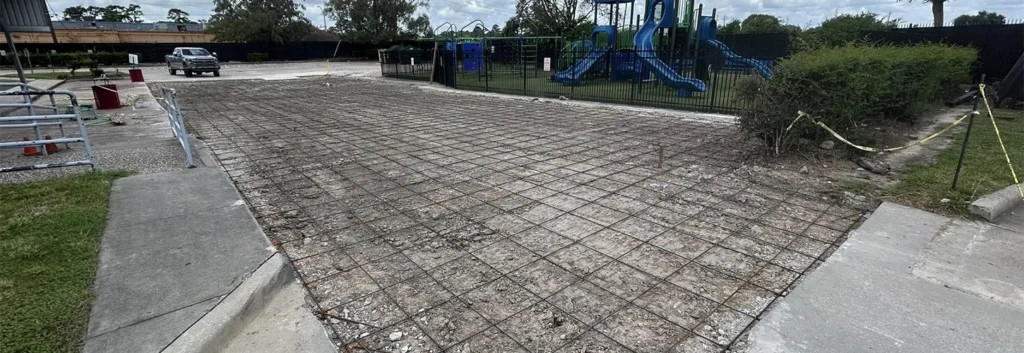
Sunken or severely cracked lots require structural renewal. We execute complete parking lot replacement for businesses in Houston, removing compromised slabs and re-engineering the base soil before pouring fresh, heavy-duty concrete.
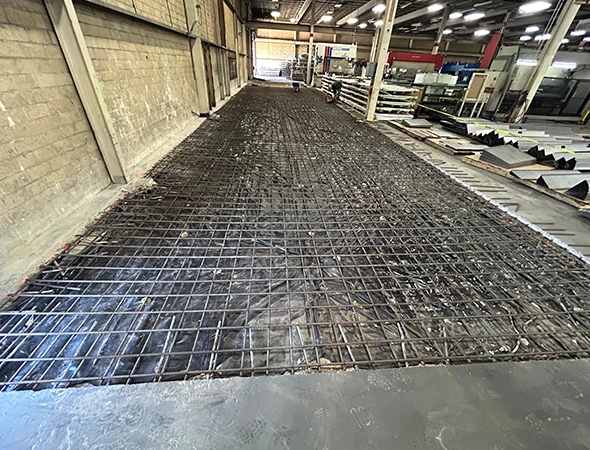
Upgrade your property’s entrance with professionally installed concrete driveways. We create durable, functional surfaces designed to improve parking space, accessibility, and your home’s overall appearance.
Create a dependable parking area for your business with professional concrete parking lot construction. We focus on functional layouts, quality workmanship, and surfaces built for everyday traffic.
From concrete installations to property improvements, we provide practical construction solutions tailored to your project’s requirements, with careful preparation and attention to the finished results.
Make your outdoor space more enjoyable with a covered patio designed around your property’s layout. Add shade, comfort, and a functional area for relaxing or entertaining.
Enhance your outdoor living area with a professionally built pergola. We create attractive structures that provide partial shade, define outdoor spaces, and complement your property’s design.
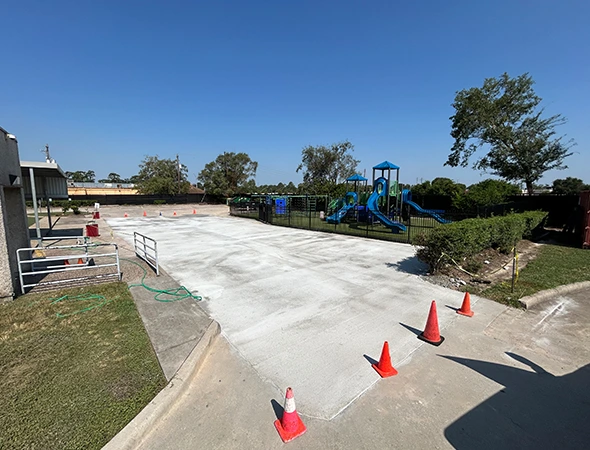
Beyond basic slab installation, we engineer commercial parking areas to handle specialized traffic patterns, heavy vehicle access, and strict municipal regulations across the Houston metropolitan area.
Multi-Family & Apartment Complex Paving
Multi-family properties face non-stop vehicular movement. We design and install durable apartment complex parking lot paving in Houston built to resist severe wear from tenant cars, delivery vans, and heavy garbage haulers.
ADA Compliance, Striping & Curbing
We deliver full layout engineering, including custom curbing, entry turnouts, and code-enforced stall arrangements. Our ADA-compliant parking lot construction in Houston ensures your commercial venue remains safe, accessible, and fully legal.
Business Continuity via Phased Construction: Phased schedules, temporary markings, and clear directional signage keep your entrances, customer parking, and fire lanes fully accessible during work.
Houston Clay Subgrade Corrections: We identify and repair weak clay, moisture, and compaction issues before placing concrete to prevent future slab shifting and failure.
Engineered for Heavy Vehicle Loads: Dumpster pads, loading bays, and turning radii receive extra thickness and steel reinforcement to withstand heavy truck traffic.
Reduced Long-Term Maintenance Costs: Rigid concrete eliminates the frequent sealcoating, patching, and resurfacing cycles required by asphalt surfaces.
Transparent, Itemized Project Scopes: Sub-base prep, drainage, rebar grids, curbing, and ADA striping are line-itemed separately for straightforward evaluation.
We inspect drainage, surface damage, traffic flow and site needs before preparing a clear scope.
Closures, traffic routes and work sequences are planned to keep your business accessible.
Work progresses in sections through preparation, construction and curing, followed by final striping and markings.
The choice depends on your budget, property plans, and driveway use. Asphalt costs less upfront but can soften and deform in Houston’s 140°F-plus summer heat, while concrete costs more but stays rigid and typically lasts longer.
| Factor | Concrete | Asphalt |
|---|---|---|
| Upfront cost | Higher to install. | Lower to install and faster back into service. |
| Heavy and standing loads | Rigid slab spreads load. Holds shape under delivery trucks, refuse vehicles and tight turns. | Flexible pavement. Prone to rutting and shoving where loads stand or turn slowly. |
| Houston summer heat | Stays dimensionally stable and reflects heat, so the surface runs cooler. | Binder softens above roughly 140 degrees surface temperature, which is where rutting starts. |
| Routine maintenance | Joint sealing, cleaning and prompt crack repair. Predictable annual line item. | Recurring sealcoat cycle plus crack filling, then eventual resurfacing. |
| Repairs | Section replacement is a project. Patches are visible. | Fast, cheap and blends in after the next sealcoat. |
| Service life | Measured in decades with modest upkeep. | Shorter cycle before major resurfacing or replacement. |
| Night visibility | Light surface reflects more, which can reduce lighting demand. | Dark surface absorbs light and needs more of it. |
A properly built concrete parking lot typically lasts 25 to 30 years with modest upkeep, while asphalt usually needs major resurfacing within 10 to 15 years. The difference comes down to how each material handles Houston’s heat and heavy vehicle loads. Concrete stays rigid and dimensionally stable even when summer surface temperatures climb past 140°F, while asphalt binder softens at that point, leading to rutting under delivery trucks and slow-turning vehicles. Concrete’s long-term durability is why many property managers accept a higher upfront cost for a lot that needs far less recurring maintenance over its lifespan.
Yes, we plan every commercial installation in phases specifically so your property can keep operating. Before work begins, we map out which sections will close, how many stalls remain available at each stage, and how customers, deliveries, and fire lane access will be routed around the active work zone. This phasing plan is built into the scope from day one, not figured out after construction starts. For retail centers, medical buildings, and apartment communities especially, keeping entrances and required access points open throughout the project is treated as a core part of the job, not an afterthought.
In most cases, this comes down to what’s happening below the surface, not the concrete itself. Houston’s expansive clay soil swells when saturated and shrinks when it dries, and if the subgrade wasn’t properly compacted and corrected before the original pour, that movement eventually shows up as cracking, settlement, or standing water. High-traffic zones like delivery aprons, dumpster pads, and truck-turning areas are especially prone to this because they carry repeated heavy loads. We inspect the sub-base first to identify the actual cause before recommending a repair, section replacement, or full rebuild.
Yes, in nearly all commercial settings. The number of required accessible spaces is based on your total parking count, and some of those spaces must include van access. Each accessible space needs to connect to the building entrance through a level, clearly defined accessible route, and access aisles must stay clear of drive lanes. We build to the layout provided by your architect, engineer, or accessibility consultant, setting grades, stall markings, and access aisles precisely to that plan. If you don’t have accessibility drawings yet, we recommend confirming requirements with a qualified professional before construction begins.
Drainage is one of the most overlooked factors in parking lot failure. Houston receives more than 50 inches of rain annually, often in short, heavy bursts, and clay soil holds much of that water rather than absorbing it, which can leave low areas saturated and unstable. Poor drainage leads to ponding, uneven settlement, and faster deterioration around joints over time. Before any concrete is poured, we map sheet-flow paths and low points across the site and plan catch basins, area drains, or trench drains where grading alone won’t move water effectively, especially on the flatter sites common across southwest Houston
Not every section of a lot carries the same load, so not every section needs to be built the same way. Passenger parking stalls handle mostly light, static weight, but refuse enclosures, delivery aprons, loading docks, fire lanes, and tight truck-turning corners take repeated heavy traffic that can cause depressions and cracking if underbuilt. We identify these high-load zones during the site assessment and strengthen the base preparation, reinforcement, and joint layout specifically there, rather than overbuilding the entire lot. This keeps the project focused on where failure actually happens first.
Often, yes. Many lots have isolated problems, a settled section, spalled surface, or deteriorating joints, where section replacement or resurfacing is the right call instead of tearing out the whole lot. However, resurfacing over a base that’s already failed just means the new surface follows the same pattern shortly after. We inspect the subgrade before making a recommendation, and we’ll tell you plainly which category your lot falls into so you’re not paying for a fix that won’t hold.
Ready to improve your commercial parking lot? Call 713-854-5949 today to discuss your project and receive a free quote.
Cross Construction Services is a licensed concrete contractor with 10+ years of experience, building durable driveways, parking lots, patios, and pergolas engineered for Houston’s shifting clay soil and unpredictable weather. Certified and insured for your protection.
Cross Construction Services builds and repairs commercial concrete parking lots across Houston, TX, Sugar Land, Missouri City, Greenwood, West University, Bel-Air, League City, and Clear Lake, delivering durable surfaces built for local soil and traffic demands.
WhatsApp us